I Guarantee a 24 Hour Response





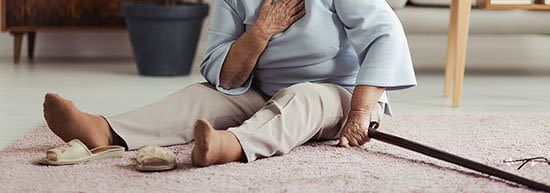
Unsupervised Falls in Nursing Homes
If you or a loved one has been injured in a nursing home due to neglect, under state and federal law you can seek compensation for the injury.
A recent study by Health Affairs, a peer-reviewed journal on health policy and services, found that the average amount of paid claims nationwide for nursing home neglect was $406,000.
According to the website SeniorAdvice, there are 3,773 senior care facilities in Wisconsin, of which 788 are nursing homes. The average annual cost for nursing home care is $87,363.
With costs that high, one should expect the utmost in professional care, but negligence leading to mishaps does still occur at nursing homes. If you or a loved one has been injured at a nursing home and you’re located in Janesville, Beloit, or Rock County, Wisconsin, contact me immediately at The Paul Benson Law Firm. I’ll help you exercise your full rights to seek the just compensation you deserve.
State & Federal Nursing Home Regulations
In Wisconsin, state law recognizes a nursing home as a place where five or more individuals not related to the owner or operator reside to receive care or treatment, but it excludes convents and residential care facilities. The statute further states that the individuals in residence, due to their mental or physical condition, must be provided “access to 24-hour nursing services, including limited nursing care, intermediate level nursing care, and skilled nursing services.”
Beyond that statement about “access,” state law places no numerical staffing requirements on the homes in terms of nursing aides or intermediate-level or skilled nurses on duty at any given time. Federal law requires the facilities to post the number of licensed and unlicensed nursing staff available for each shift but also mandates no staffing-level requirements.
The Nursing Home Reform Act of 1987 requires nursing assistants to receive at least 75 hours of training within the first four months of employment, which then certifies them as being competent in providing care. (This requirement was waived during the height of the COVID-19 crisis.) The federal legislation also contains a “bill of rights” for nursing home residents, starting with the “right to freedom from abuse, mistreatment, and neglect.”
Regarding accidents, Wisconsin law says the facility must ensure that:
- The resident environment remains as free of accident hazards as is possible
- Each resident receives adequate supervision and assistance devices to prevent accidents
If a resident falls and suffers an injury when no adequate safety measures were in place — in terms of eliminating hazards and/or in terms of assisting the resident with mobility issues — the facility can be held liable for negligence.
Detecting & Proving Neglect
Proving negligence isn’t always easy.
In 2018, the Wisconsin Department of Justice developed what it called the Safe Seniors Camera Program, which provided video recording devices with memory cards that could be “covertly” set up, allowing family members to download video (but not audio) from the home where their loved one was receiving care. Unfortunately, the program excluded use in “nursing homes with multiple patients,” being mainly intended for use in private homes where caretakers were hired to provide help.
After the first year of the program, then-Wisconsin Attorney General Brad Schimel concluded that “one in nine seniors has been a victim of abuse, neglect, or some type of exploitation in the last 12 months.”
Probably the most powerful tools for showing signs of neglect are photographs and witness statements. In times when visitations are limited or barred because of the pandemic, obtaining evidence like this can prove difficult, however.
If the nursing home participates in Medicaid or Medicare, you can obtain the resident’s medical record to look for signs of past neglect or injury. You can also check any complaints filed with local watchdog groups. Likewise, if the state has concluded any investigations or issued citations, you can seek those out to cite as evidence of prior neglect or abuse.
Most importantly, the first thing to do when an injury occurs is to file a complaint and then seek the help of an experienced personal injury attorney.
Who Could Be Liable?
A nursing home, like any physical property, is subject to premises liability laws, meaning it can be sued for accidents caused by hazards on the property. A nursing home also has a duty of care responsibility, which if it fails to carry out, can lead to negligence claims. The Nursing Home Reform Act holds the nursing home liable if there has been, among other causes:
- Negligent hiring and/or training of nursing staff
- Negligent maintenance of equipment
- Failure to monitor staff members
- Exposure to safety and health hazards
- Failure to provide adequate security
If the nursing home itself is negligent in these and other areas, it can be held liable through a civil lawsuit. In some cases, individual caregivers who act abusively or negligently can also be sued, as can third-party suppliers of equipment used in the nursing home if the equipment is proven to be responsible for the injury or accident.
Hire an Experienced Wisconsin Personal Injury Attorney
The statute of limitations for personal injury claims in Wisconsin is three years from the date of the injury. Wisconsin is also a comparative fault state, so the plaintiff can be held partially at fault for the injury. For instance, if your loved one can be shown in court to have been 20% at fault, and your claim is for $25,000, the award can be reduced by $5,000.
Bringing a negligence claim against a nursing home requires the knowledge and hands-on experience of a personal injury attorney who can investigate and assess fault to bolster your claim. If you’re in Beloit, Janesville, or Rock County, Wisconsin, call me at The Paul Benson Law Firm. I will provide thoughtful and aggressive representation for you and your loved one.