I Guarantee a 24 Hour Response

PUT ME TO THE TEST
By Paul Benson February 1, 2026
Why Is It Crucial To Reach Out To A Lawyer Soon After An Accident? Contacting a lawyer promptly after an accident is vital to preserve crucial evidence from the accident scene. Evidence like skid marks, surveillance videos, and witness statements can disappear quickly. By involving a lawyer early on, you ensure that all necessary evidence is collected and preserved, which can significantly impact the outcome of your case. Why Do Some People Delay Contacting A Lawyer After An Accident? Many individuals delay contacting a lawyer due to the misconception that they are not "lawsuit people." However, when faced with insurance companies refusing to compensate them fairly, they realize the need to protect their rights. By waiting to involve a lawyer, important evidence may be lost, such as video footage or witness accounts, which can weaken their case significantly. What Are The Potential Problems Individuals Face When Insurance Adjusters Reach Out Early? Insurance adjusters often aim to elicit statements that downplay the severity of injuries or shift blame away from their policyholders. By recording conversations and obtaining seemingly innocuous statements, they can later use discrepancies to undermine a claim. Consulting with a lawyer before engaging with insurance adjusters is crucial to avoid inadvertently harming your case. What Key Evidence Can Be Lost If Individuals Wait Too Long After An Accident To Seek Legal Counsel? Delaying legal representation can result in the loss of crucial evidence such as video footage, debris placement at the scene, and witness recollections. Additionally, timely medical documentation is essential for accurately assessing and documenting injuries. Without early involvement, individuals risk missing out on vital evidence that could strengthen their case. How Does The Timing Of Medical Bills And Documentation Impact An Insurance Company's Evaluation Of A Claim? In Wisconsin, the timing of medical bills and documentation is critical due to the collateral source rule. Health insurance coverage may pay medical bills upfront, but individuals can still recover the full amount from the at-fault party's insurance. However, delays or discrepancies in submitting bills can lead to reduced compensation and financial risks for the injured party. What Tactics Do Insurance Companies Employ To Settle Claims Quickly Without Individuals Fully Understanding The Implications? Insurance companies may use tactics like sending blank medical releases or offering immediate settlement checks to expedite claim resolutions. Individuals may unknowingly sign away their rights or settle their claims prematurely, leading to potential long-term repercussions. It is essential to seek legal guidance to navigate these tactics and ensure fair compensation for injuries. What Steps Should Individuals Take After A Minor Accident To Protect Their Legal Rights? After a minor accident, individuals should document the scene thoroughly, report the incident to their insurance company, and consider seeking a legal consultation. It is crucial to accurately relay their version of events to the police, report any injuries promptly, and consult with a lawyer to understand their rights and potential legal options. Is It Advisable For Individuals To Seek Medical Evaluation After A Minor Accident Even If They Feel Only Minor Discomfort? Yes, it is recommended for individuals to undergo a medical evaluation after a minor accident, even if they experience minor discomfort. Prompt medical assessment can uncover hidden injuries that may worsen over time if left untreated. By seeking timely medical attention, individuals protect their health and establish a documented record of injuries for potential legal claims. What Are Some Early Moves Insurance Companies Make That Individuals Should Be Cautious About Following An Accident? Insurance companies may attempt to obtain blanket medical releases or offer immediate settlement checks to expedite claims processing. These tactics can lead to individuals inadvertently signing away their rights or settling for inadequate compensation. It is crucial to seek legal guidance to navigate such tactics and protect one's legal rights effectively.
By Paul Benson November 14, 2025
Understanding Bicycle Accident Laws in Wisconsin: Rights, Liability, and What Cyclists Should Know
By Paul Benson November 14, 2025
Insurance Bad Faith in Wisconsin: What to Do When Your Insurance Company Treats You Unfairly
By Paul Benson November 12, 2025
Slip and Fall Accidents in Wisconsin: What Property Owners Are Really Responsible For
By Paul Benson November 12, 2025
What Really Happens After a Car Crash in Wisconsin: How to Protect Yourself and Your Rights
By Paul Benson November 12, 2025
Understanding Wisconsin’s Direct Action Statute: Who You’re Really Suing After an Accident
Show More
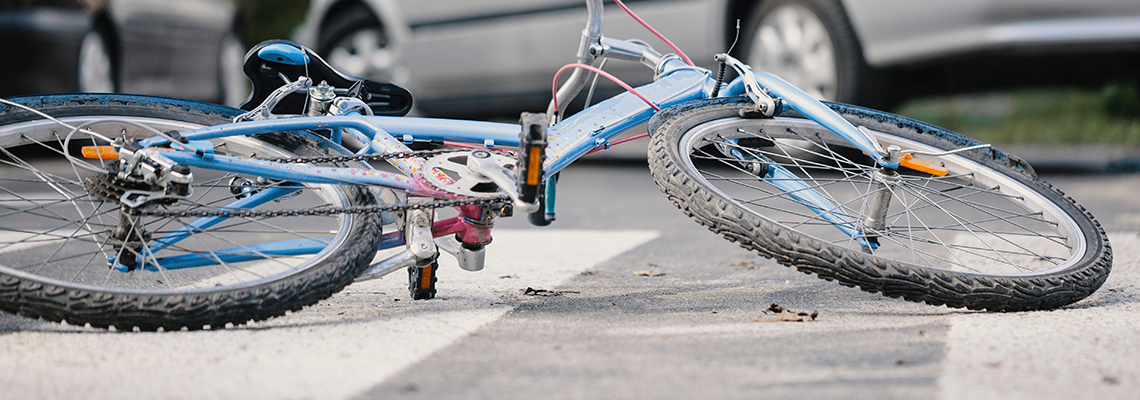
A bicycle is laying on the ground after being hit by a car.

Bicycle Crashes

Janesville Bicycle Accident Attorney Serving Bike Accident Victims Across Wisconsin

Bicyclists have equal rights on the road

If a car hits you while you are riding your bicycle, you need to call an experienced personal injury lawyer. Our cities are built for cars and our culture favors cars, indeed, most people drive cars every day. Juries are comprised of people who mostly drive cars. Under Wisconsin law, bicycles have equal rights to the road unless clearly marked otherwise. US interstates and some other freeways prohibit bicycles but almost all city streets permit bicycles. You need an advocate to make that point clear to the insurance company adjuster or eventually to a jury of your peers.

Don’t get Bullied onto the Sidewalk

Wisconsin law generally prohibits people from riding bicycles on the sidewalk, but the law allows local municipalities to carve out exceptions on their sidewalks (See WSA § 346.94 (goo.gl/xprrNn)). For example, the City of Janesville, Wisconsin allows bicycles on the sidewalk in most residential areas. But, the Janesville city code prohibits riding on sidewalks in the central business district or near schools. Pedestrians also always have the right of way on Janesville sidewalks (See Janesville City Code 10.64.080 (https://goo.gl/nLQL5J)).


Regardless of the law, the sidewalk is often not a safe place to ride a bicycle (small children excluded). Bicycles travel faster than pedestrians. Most people bicycle at approximately 12-16 mph while people walk at approximately 4 mph. People in cars are not trained to look for someone bicycling that fast on the sidewalk. As a result, cars often strike bicyclists while they are making turns. The person driving the car believes that they have sufficient time and space to make a safe turn, but don’t fully appreciate the speed of the bicyclist.


Riding a bicycle in the street can be intimidating and scary at first. It is best to avoid major commercial streets and highways. The speed limits are higher and the amount of traffic makes riding a bicycle more dangerous. Secondary streets make for great bicycle roads. Ride on the right hand side of the lane, but not so close to the curb that motorists don’t see you. This is safer than the sidewalk because cars can easily see you and appreciate your speed. There are no trees or signs blocking the motorists’ view. The street is also free of obstacles common to the sidewalks, like driveways, sprinklers and children’s toys.

Get the Right Gear

Wear a helmet. Make sure it fits snug to your head. Slamming your skull on the pavement is lot less cool than wearing a helmet. Plus, there are a lot of cool helmets available all over the internet. Amazon is a good place to start because there are lots of customer reviews to help inform your decision.


A good headlight and taillight are crucial to your safety. There are three main goals when considering what lights to buy. First, you need to see the road. Second, you need cars to see you. Third, you don’t want to blind motorists. 700 to 750 lumens seems to be a good balance for the headlight. Buying a light that can charge with a standard USB charger is convenient and a good option for the daily cyclist who doesn’t have time to buy new AAA batteries every week.

Make sure you have coverage

Buy the most underinsured and uninsured motorist coverage that you can, commonly referred to as UM/UIM. If possible purchase an umbrella policy that attaches to your UM/UIM coverage. When you are riding a bicycle, you are obviously more susceptible to major injury. Wisconsin law only mandates $25,000 in liability coverage. A trip to the emergency room that involves CT scans can easily eclipse that $25,000 in coverage. That leaves nothing for your future medical expenses, lost wages or pain and suffering. If you have sufficient UM/UIM coverage, you will be covered for those expenses no matter what. I recommend buying at least $100,000 in UM/UIM coverage, but it may only be a few more dollars to increase that coverage to $250,000 or more.

Hire a Lawyer who Cycles

I’ve been riding a bicycle as my main form of transportation for the last ten years. Three cars have hit me. I’ve been forced to break the traffic laws for my own safety. I understand the challenges of riding a bicycle in our modern car-centric cities. I also know how much it hurts to be sidelined from bicycling for an extended period. Don’t trust your case to an attorney who doesn’t fully understand the issues that bicyclists face every day and can’t understand what it is like to be unable to cycle for an extended period. I’ve handled many bicycle injury cases and even recovered from insurance companies when my client was given a citation by the police.